Honor Magic8 Pro
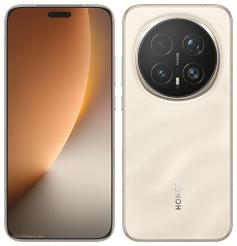 |
VS |
Honor 400 Pro
 |
|
October 23, 2025
|
Released: |
May 23, 2025 |
|
Android 16, up to 7 major Android upgrades, MagicOS 10
|
Operating System: |
Android 15, up to 6 major Android upgrades, MagicOS 9 |
|
Black, White, Gold, Mint
|
Colors: |
Midnight Black, Lunar Grey, Tidal Blue |
|
BKQ-N49, BKQ-AN90, BKQ-AN10
|
Models: |
DNP-NX9 |
|
5G, 4G, 3G, 2G
|
Network Speed: |
5G, 4G, 3G, 2G |
| Display |
|
6.71 inches, 108.3 cm2 (89.6% screen-to-body ratio)
|
Size: |
6.7 inches, 109.5 cm2 (89.5% screen-to-body ratio) |
|
1256 x 2808 pixels, 20:9 ratio (458 ppi density)
|
Resolution: |
1280 x 2800 pixels, 19.5:9 ratio (460 ppi density) |
|
LTPO OLED, 1B colors, 120Hz, 4320Hz PWM, Dolby Vision, HDR Vivid, 1800 nits (HBM), 6000 nits (peak)
|
Type: |
AMOLED, 1B colors, 120Hz, 3840Hz PWM, HDR Vivid, 5000 nits (peak) |
|
Giant Rhino Glass
|
Protection: |
|
| Body |
|
161.2
mm (6.35 in) |
Height: |
160.8 mm (6.33 in) |
|
75
mm (2.95 in) |
Width: |
76.1 mm (3.00 in) |
|
8.3
mm (0.33 in) |
Thickness: |
8.1 mm (0.32 in) |
|
219 g |
Weight: |
205 g |
|
IPx9
|
Water Resistant: |
IPx9 |
|
Glass front (Giant Rhino Glass), fiber-reinforced plastic back
|
Material: |
|
|
· Nano-SIM + eSIM· eSIM + eSIM· Nano-SIM + Nano-SIM - China
|
SIM: |
Nano-SIM + Nano-SIM + eSIM (max 2 at a time)Nano-SIM + eSIM |
| Rear Camera |
|
3
|
Number of Cameras: |
3 |
|
50 MP, f/1.6, 23 mm (wide), 1/1.3″, 1.2µm, multi-directional PDAF, OIS
200 MP, f/2.6, 85 mm (periscope telephoto), 1/1.4″, 0.56µm, multi-directional PDAF, OIS, 3.7x optical zoom
50 MP, f/2.0, 12 mm, 122˚ (ultrawide), 1/2.88″, 0.61µm, dual pixel PDAF
|
Camera Resolutions: |
200 MP, f/1.9, (wide), 1/1.4″, PDAF, OIS
50 MP, f/2.4, (telephoto), 1/2.0″, 0.8µm, PDAF, OIS, 3x optical zoom
12 MP, f/2.2, 112˚ (ultrawide), AF |
|
4K@24/30/60/120fps, 1080p@24/30/60/120/240fps, gyro-EIS, OIS, HDR, 10-bit video
|
Video Resolution: |
4K, 1080p, gyro-EIS, OIS |
|
Laser AF, color spectrum sensor, LED flash, HDR, panorama
|
Features: |
LED flash, HDR, panorama |
| Front (Selfie) Camera |
|
50 MP, f/2.0, 21 mm (wide), 1/2.93″, 0.6µm, PDAF
TOF 3D, (depth/biometrics sensor)
|
Camera Resolutions: |
50 MP, f/2.0, (wide)
2 MP, f/2.4, (depth) |
|
4K@30/60fps, 1080p@30/60fps, gyro-EIS
|
Video Resolution: |
4K, 1080p, gyro-EIS |
|
|
Features: |
HDR |
| Battery |
|
Si/C Li-Ion 7100 mAh (Global); 6270 mAh (Europe); 7200 mAh (China)
|
Battery Capacity: |
Si/C Li-Ion 5300 mAh - Europe
Si/C Li-Ion 6000 mAh - ROW |
|
100W wired (Global)
120W wired, 100W PPS, 40W UFCS (China)
80W wireless
Reverse wireless
5W reverse wired
|
Charging: |
100W wired, 51% in 15 min, 100% in 39 min
50W wireless
5W reverse wired
Reverse wireless |
| Hardware |
|
Qualcomm SM8850-AC Snapdragon 8 Elite Gen 5 (3 nm)
|
Chipset: |
Qualcomm SM8650-AB Snapdragon 8 Gen 3 (4 nm) |
|
Octa-core (2x4.6 GHz Oryon V3 Phoenix L + 6x3.62 GHz Oryon V3 Phoenix M)
|
Processor: |
Octa-core (1x3.0 GHz Cortex-X4 & 5x2.95 GHz Cortex-A720 & 2x2.0 GHz Cortex-A520) |
|
Adreno 840
|
GPU: |
Adreno 750 |
|
256GB 12GB RAM, 512GB 12GB RAM, 512GB 16GB RAM, 1TB 16GB RAM
|
Memory: |
256GB 12GB RAM, 512GB 12GB RAM |
|
No
|
Memory Card Slot: |
No |
|
Fingerprint (under display, ultrasonic), Face ID, accelerometer, gyro, proximity, compass
|
Sensors: |
Fingerprint (under display, optical), accelerometer, compass, proximity (ultrasonic) |
|
No
|
Radio: |
No |
|
No
|
Audio Jack 3.5 mm: |
No |
|
Emergency SOS via satellite (messages and calls) - China only
|
Other: |
|
| Network & Connectivity |
|
Wi-Fi 802.11 a/b/g/n/ac/6/7, dual-band, Wi-Fi Direct
|
Wi-Fi: |
Wi-Fi 802.11 a/b/g/n/ac/6e/7, dual-band or tri-band, Wi-Fi Direct |
|
6.0, A2DP, LE, aptX HD, aptX Adaptive, aptX Lossless, LHDC 5, Auracast, ASHA
|
Bluetooth: |
5.4, A2DP, LE, aptX HD |
|
USB Type-C 3.2, DisplayPort 1.2, OTG
|
USB: |
USB Type-C 2.0, OTG |
|
GPS (L1+L5), BDS (B1I+B1c+B2a+B2b), GALILEO (E1+E5a+E5b), QZSS (L1+L5), NavIC (L1+L5), GLONASS
|
GPS: |
GPS, GALILEO, GLONASS, QZSS, BDS |
|
Yes
|
NFC: |
Yes |
|
5G / LTE / HSPA / GSM
|
Technology: |
5G / LTE / HSPA / GSM |